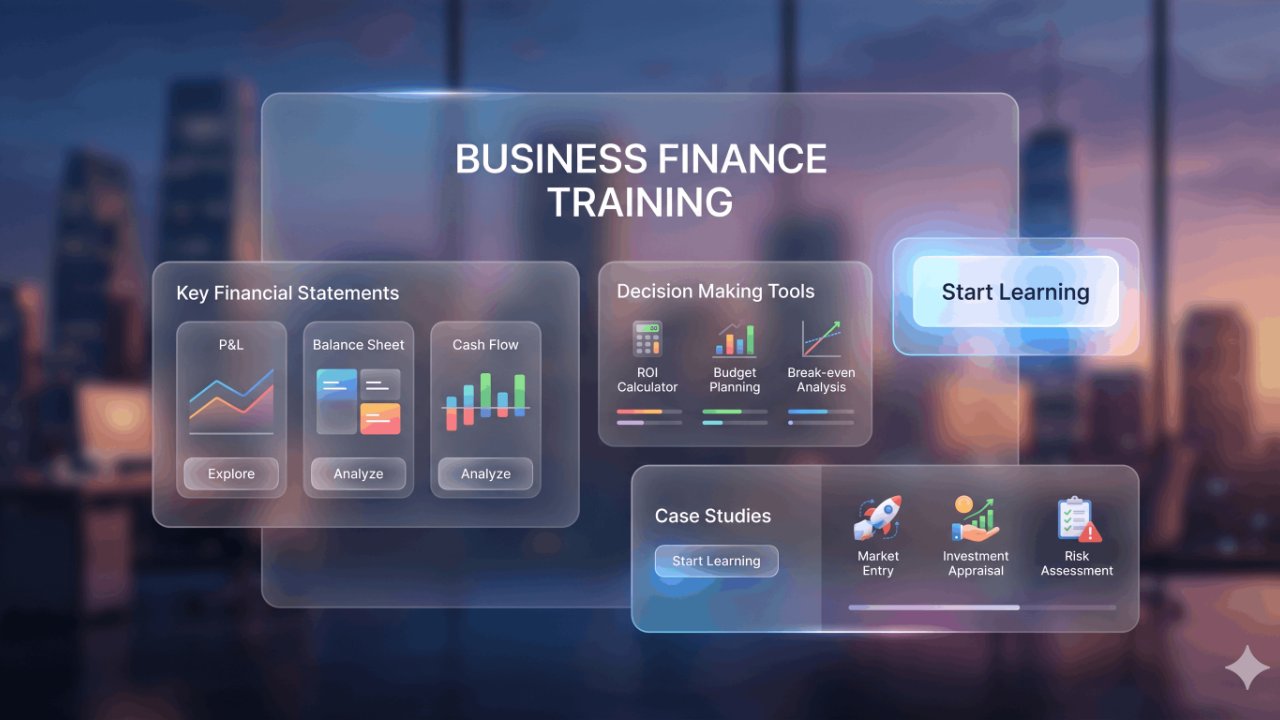
Financial Foundations for Business
Financial Foundations for Business What is Financial Management: Financial management is about understanding how money moves in your business and using that understanding to make better decisions every day. It is not about complex accounting—it is about knowing what you earn, what you spend, and what is left. This helps you stay in control instead of reacting when problems arise. Revenue, Costs, and Profit: Revenue is the money coming into your business, costs are what you spend to operate, and profit is what remains after all expenses are paid. Understanding these three clearly helps you see whether your business is actually making money or just staying busy without real financial gain. Difference Between Cash and Profit Profit is what your business earns on paper, but cash is what you actually have in the bank. Many businesses fail even when profitable because they run out of cash. Learning this difference helps you avoid situations where you cannot pay suppliers, staff, or expenses on time Key Financial Terms: This section introduces simple financial language used in everyday business, such as expenses, margins, turnover, and overheads. Understanding these terms helps you communicate better with accountants, funders, and partners, while also giving you confidence to interpret reports and make decisions without feeling lost or overwhelmed.
Saica Certificate Accounting Technician: SAQA ID 77143 | 06 Professional Ethics In Accounting & Finance
This qualification is aimed at building capacity in accounting technicians to enable them to produce and record reliable financial information.
Saica Certificate Accounting Technician: SAQA ID 77143 | 05 Indirect Tax
This qualification is aimed at building capacity in accounting technicians to enable them to produce and record reliable financial information.
Saica Certificate Accounting Technician: SAQA ID 77143 | 04 Cost and Revenues
This qualification is aimed at building capacity in accounting technicians to enable them to produce and record reliable financial information.
Saica Certificate Accounting Technician: SAQA ID 77143 | 01 Accounts Preparation I
This qualification is aimed at building capacity in accounting technicians to enable them to produce and record reliable financial information.
SAICA Certificate Accounting Technician: SAQA ID 77143 | 120 Credits
AT(SA) is a competency-based accountancy qualification and membership designation offered by the South African Institute of Chartered Accountants (SAICA), the foremost accountancy institute in South Africa. The qualification promotes the theory and practice of accountancy and offers prospects a solid foundation in accounting, finance and business practice. The underpinning designation is SAICA’s entry level designation that enables students to move from being unskilled and unqualified to being respected accountancy and finance professionals. AT(SA) qualifications are designed against global standards and are quality assured by SAICA to ensure relevance to the South African workplace. AT(SA) is accessible to aspirant accountants who operate at foundational business levels.

how do i start as a sale rep
**Master the core sales skills every rep needs to start strong and close your first deals.** This course is built for absolute beginners who want to understand the language and mechanics of sales before diving into the field. You'll learn the essential building blocks: what a sales pipeline is, how to research prospects, how to write outreach messages, and how to handle objections with confidence. No prior experience or fancy tools are required—just a willingness to learn. We'll break down the typical sales process from lead generation to closing, and you'll practice each stage through simple exercises. By the end, you'll be able to explain the role of a sales rep in any organization, identify the key metrics that matter, and walk into your first sales conversation knowing exactly what to say and do. You'll leave with a personal action plan to continue building your skills. If you've ever felt lost about where to start, this course gives you a clear, structured roadmap. You'll finish with a solid foundation and the confidence to take the next step toward a career in sales. **Run your own simulated sales campaign from prospecting to closing and measure your results.** This course transforms your learning into a real-world project: building and executing a complete sales campaign from scratch, even if it's just a practice run. You'll choose a product or service, research your target market, create a prospect list, and craft a full outreach sequence. Then you'll run a simulated sales cycle, including negotiating and closing, while tracking your performance in a simple dashboard. We'll cover case studies from successful startups and experienced reps to show you the thinking behind great sales strategy. You'll learn how to set goals, measure conversion rates, and analyze what worked and what didn't. This project-based approach means you're not just absorbing information—you're creating a portfolio piece you can show to hiring managers as proof of your skills. By the end, you'll have a completed sales campaign you can discuss confidently in interviews, plus a deeper understanding of the entire sales process. For learners who want to demonstrate initiative and critical thinking, this course offers the most engaging and results-oriented path into the world of sales.
Saica Certificate Accounting Technician: SAQA ID 77143 | 03 Cash Management
This qualification is aimed at building capacity in accounting technicians to enable them to produce and record reliable financial information.
Saica Certificate Accounting Technician: SAQA ID 77143 | 02 Accounts Preparation II
This qualification is aimed at building capacity in accounting technicians to enable them to produce and record reliable financial information.
Saica Certificate Accounting Technician: SAQA ID 77143 | 120 Credits | 01 Basic Accounting
This qualification is aimed at building capacity in accounting technicians within the public sector.

U.S. Data Privacy & State-Level Compliance
The United States privacy landscape is significantly more fragmented than Europe or South Africa. There is **no single federal law** like the GDPR or POPIA. Instead, the U.S. operates on a "sectoral" model (federal laws for specific industries) and a "patchwork" of comprehensive state laws. +1 As of **April 2026**, the U.S. is currently debating the **SECURE Data Act** at the federal level to create a national standard, but for now, compliance remains a multi-layered effort

Mastering POPIA Compliance in South Africa
The Protection of Personal Information Act (**POPIA**) is a critical cornerstone for any South African business. Given its complexity, a comprehensive course should balance legal theory with practical implementation
ABC Consulting: New Employee Induction & Technical Operations Manual
Welcome to ABC Consulting. This document serves as your operational baseline and technical induction manual. It outlines our core workflows, infrastructure deployment processes, and mandatory Human Resources (HR) governance protocols. Please review this documentation thoroughly to ensure operational readiness. --- **1. System Access & IT Provisioning Workflow** To ensure secure and efficient deployment of your hardware and software environments, ABC Consulting utilizes a strictly gated IT provisioning process. **1.1 Credential Generation & Hardware Allocation** The following sequential workflow dictates how your technical environments are initialized: 1. **HR Authentication Trigger:** HR finalizes the employment contract and inputs data into the Human Capital Management (HCM) system. 2. **Automated IAM Provisioning:** The Identity and Access Management (IAM) system generates a unique User Principal Name (UPN) and assigns Role-Based Access Control (RBAC) tiers based on your job architecture. 3. **Hardware Configuration:** IT procures and images standard-issue hardware using the enterprise Mobile Device Management (MDM) profile. 4. **Credential Handover:** The employee receives temporary cryptographic keys (passwords/tokens) via a secure out-of-band channel (e.g., personal SMS). 5. **Initial Authentication:** The employee logs into the SSO portal, forces a password reset, and registers Multi-Factor Authentication (MFA) devices. ---
Soler Panel Installation Tutorial
Topic: Soler Panel Installation Tutorial Audience: General learners Language: English Teaching style: interactive Length: design ~4 slide(s).
Microeconomics South African Year One University
Topic: Microeconomics South African Year One University Audience: General learners Language: English Teaching style: interactive Length: design ~20 slide(s).
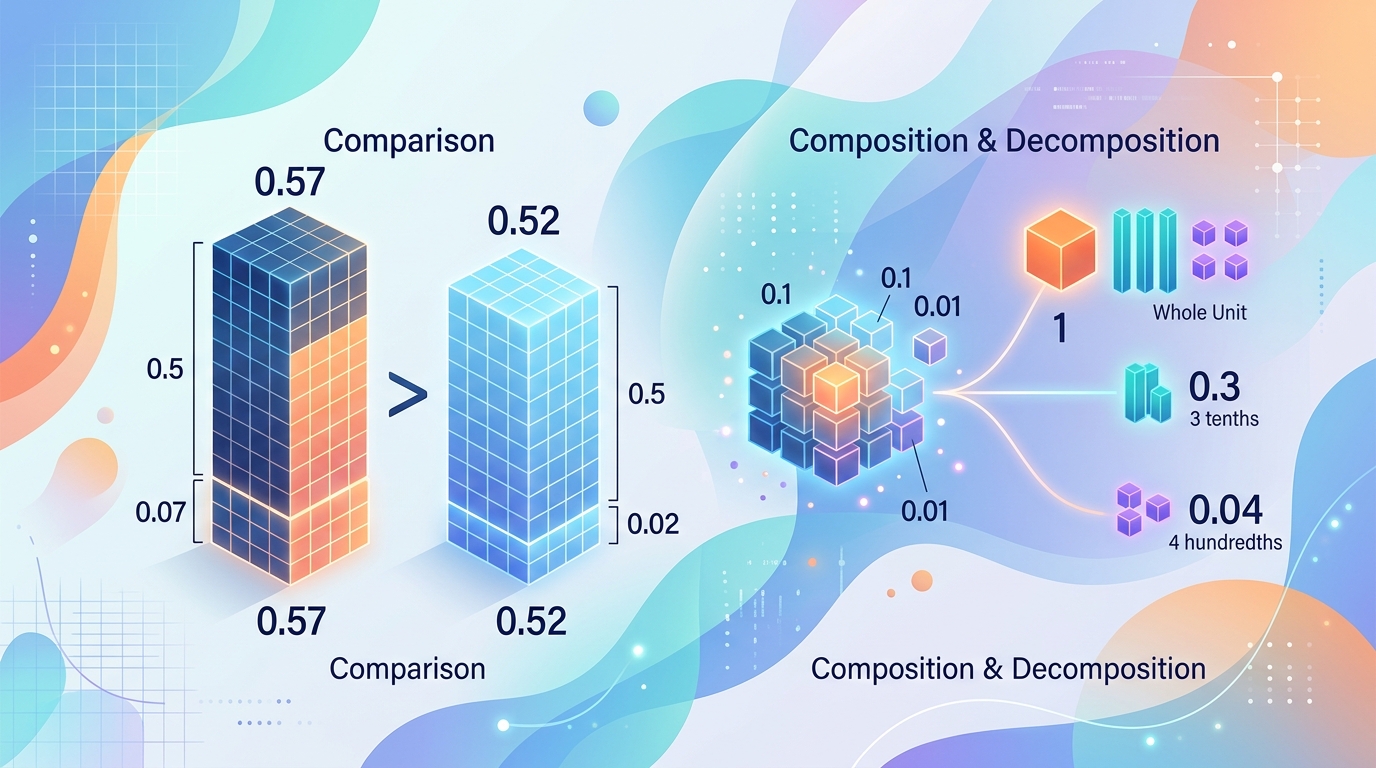
Mathematics Decimals
I want to compare decimals and compose with decomposing decimals

Learn IsiZulu
**Speak IsiZulu from day one in real conversations, not just vocabulary drills.** This course is for anyone who wants to actually use IsiZulu in daily life—whether you are traveling to South Africa, making friends, or simply love learning languages the practical way. You will skip the grammar-heavy theory and instead learn high-frequency phrases, greetings, questions, and responses you can immediately apply in restaurants, taxis, markets, and social gatherings. Each lesson centers on a real-life scenario, such as introducing yourself, ordering food, asking for directions, or chatting about the weather. You will practice listening and speaking through audio prompts and role-play exercises that mimic authentic interactions. By the end, you will confidently hold simple conversations, understand common expressions, and respond naturally to native speakers without freezing up. Outcomes include the ability to greet and exchange pleasantries, give and ask for basic personal information, handle everyday transactions, and follow the gist of slower-paced conversations. The focus is on fluency and confidence, not perfection, so you will build a strong spoken foundation that makes further learning easier. **Master the foundations of IsiZulu for academic study and advanced language learning.** This rigorous, structured course is ideal for students, educators, or language enthusiasts who want a solid academic grounding in IsiZulu. It follows a systematic progression from the alphabet and sounds to noun classes, concordial agreement, verb conjugation, and sentence construction. You will build a strong grammatical framework that supports future advanced study or research. Each unit includes clear explanations, written exercises, and reading passages that reinforce the patterns. You will learn to distinguish the five vowel sounds, master click consonants, and understand the all-important noun class system that governs the language. Regular quizzes and translation tasks ensure you can apply the rules with accuracy, not just recognize them. By the completion, you will be able to read and write short paragraphs, construct grammatically correct sentences across different tenses, and recognize the roots of complex words. You will also gain a working vocabulary of over 800 high-frequency terms. This course is your first step toward academic proficiency or preparing for formal language examinations.
Saica Certificate Accounting Technician: SAQA ID 77143 | 04 Cost and Revenues II
This qualification is aimed at building capacity in accounting technicians to enable them to produce and record reliable financial information.
Siaca Certificate Accounting Technician: SAQA ID 77143 | 05 Computerised Accounting
This qualification is aimed at building capacity in accounting technicians within the public sector.
Saica Certificate Accounting Technician: SAQA ID 77143 | 04 Basic Costing
This qualification is aimed at building capacity in accounting technicians within the public sector.
Saica Certificate Accounting Technician: SAQA ID 77143 | 03 Work Effectively In Accounting & Finance
This qualification is aimed at building capacity in accounting technicians within the public sector.
Saica Certificate Accounting Technician: SAQA ID 77143 | 02 Basic Accounting II
This qualification is aimed at building capacity in accounting technicians within the public sector.
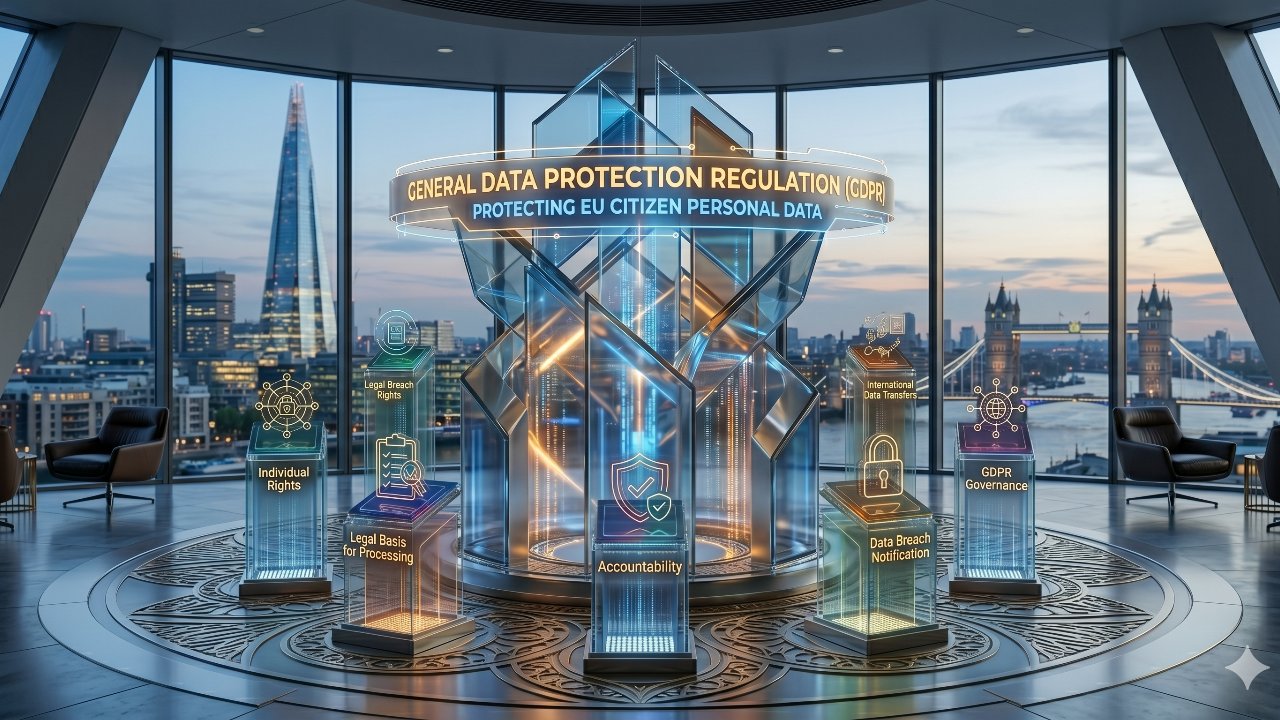
GDPR Compliance & Data Privacy Management
The European counterpart to POPIA is the **General Data Protection Regulation (GDPR)**. While they share many similarities, the GDPR is significantly more stringent regarding documentation, international data transfers, and the rights of individuals.
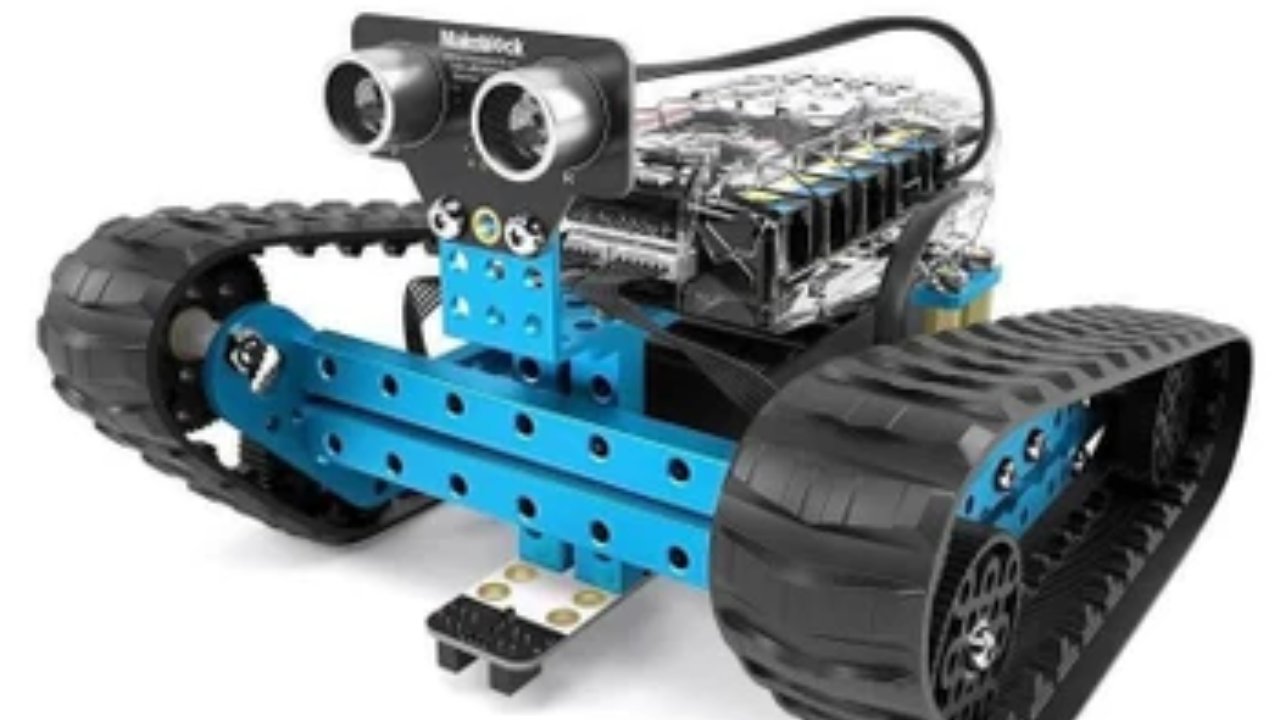
SPIKE Prime Robotics Curriculum for Ages 11 and 13
# SPIKE Prime Robotics Curriculum for Ages 11 and 13 This curriculum is designed for two learners using one LEGO Education SPIKE Prime set. It is written as a home robotics class: hands-on, interactive, concept-rich, and progressive. The goal is not only to build robots, but to understand how robots sense, decide, move, fail, improve, and complete missions. Recommended pace: 24 weeks, 2 sessions per week, 75-90 minutes per session. Optional pace: 12 weeks if you do 4 sessions per week, or 36 weeks if you slow down and add more invention time. ## Big Goals By the end, your sons should be able to: - Build strong mobile robots using gears, frames, axles, wheels, attachments, and sensors. - Program using blocks first, then gradually move into Python. - Explain core robotics concepts: input, output, control loops, feedback, calibration, debugging, algorithms, sensor thresholds, proportional control, mechanical advantage, and trade-offs. - Navigate accurately using motor rotations, gyro turns, line following, color sensing, and distance sensing. - Design and test attachments for object pushing, lifting, grabbing, sorting, and delivery. - Use an engineering notebook to plan, predict, test, measure, and improve. - Complete a final autonomous mission challenge similar to FIRST LEGO League or World Robot Olympiad style tasks. ## Roles for Two Brothers They should work as one team but rotate roles every session. - Builder: leads physical construction and stability. - Programmer: creates and tests code. - Test engineer: measures accuracy, records data, spots patterns. - Mission strategist: decides the order of tasks and robot behavior. For the 11-year-old: - Focus on visual blocks, clear cause-effect reasoning, building, testing, and explaining what the robot does. - Give smaller coding targets: "make it drive 30 cm", "stop at black", "turn until it sees red". For the 13-year-old: - Add math, variables, functions, sensor calibration, pseudocode, data tables, and Python versions of programs. - Give leadership tasks: explain why a robot failed, estimate error, design a reusable function, compare two strategies. ## Materials Required: - LEGO Education SPIKE Prime set. - SPIKE App. - Laptop or tablet with Bluetooth. - Masking tape or painter's tape. - Measuring tape or ruler. - Large sheet of paper/cardboard or floor space for test tracks. - Printed or hand-drawn mission mat. - Notebook for engineering logs. Helpful extras: - LEGO SPIKE Prime Expansion Set if you later want richer competition builds. - Large poster board for maps. - Black electrical tape for line following. - Small boxes, cups, paper balls, or LEGO bricks as mission objects. - Stopwatch. ## Class Ritual for Every Session Use this structure often. It makes learning feel like real engineering. 1. Mission Brief - What problem are we solving today? 2. Predict - What should happen? What could go wrong? 3. Build or Modify - Create the robot, attachment, or test rig. 4. Code - Start simple, then improve. 5. Test Three Times - One test is luck; three tests reveal behavior. 6. Debug - Change one thing at a time. 7. Explain - Each child explains the robot in plain language. 8. Notebook - Record final code idea, measurements, failures, and next improvement. ## Assessment Rubric Score each major challenge from 1 to 4. 1. Emerging: robot sometimes works, explanation is unclear. 2. Developing: robot works with help, explanation includes basic logic. 3. Proficient: robot works repeatedly, learner can explain code and build choices. 4. Advanced: robot is reliable, improved through data, and code is organized with variables/functions. ## Phase 1: Orientation and Robot Thinking ### Week 1 - Meet the Robot Session 1: Kit discovery and hub basics - Sort parts by type: beams, frames, pins, axles, gears, wheels, motors, sensors. - Identify hub, ports, but
how do i clean dish washer
Topic: how do i clean dish washer Audience: General learners Language: English Teaching style: interactive Length: design ~4 slide(s).